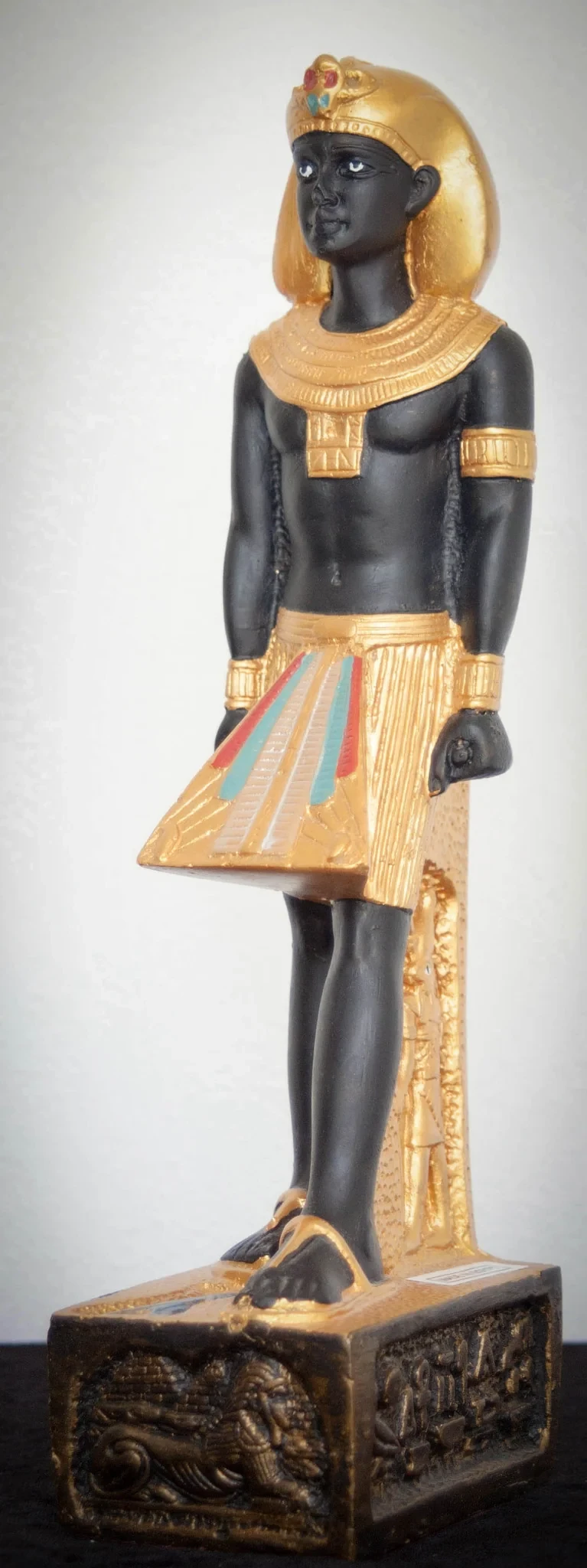
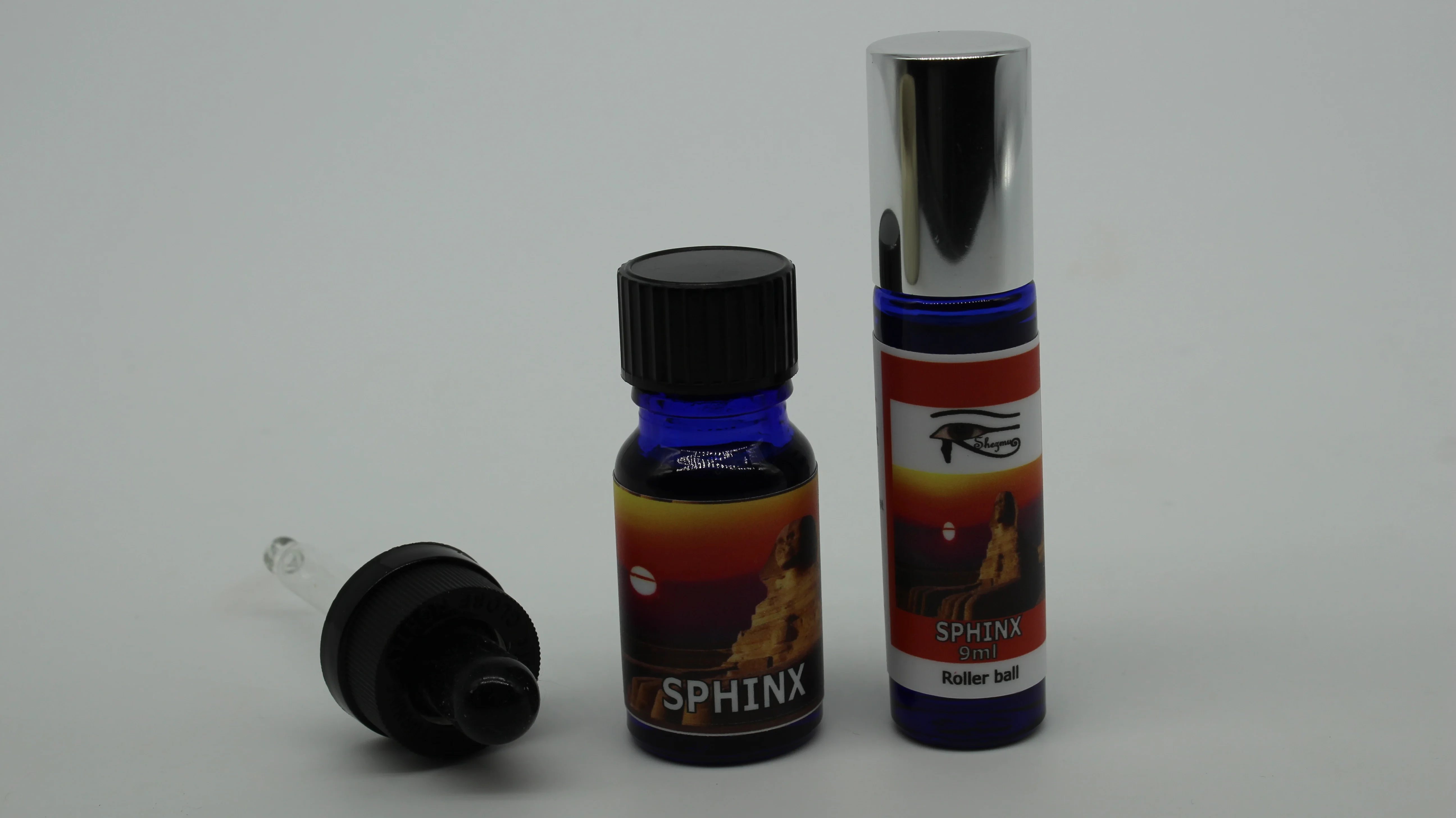
Price includes Shipping and Insurance Australia Wide. Egyptian Oils Shezmu Egyptian God and Goddess Collection. OSIRIS Essence in 10 ml Roll-on ball. Pure oils imported from Egypt. We store and use dark Amber and Cobalt Blue bottles. Scent: A complex scent with the scent of powdery flowers and the scent of fruits with a mild sweetness and sourness, with the depth and bitterness of incense and vanilla. The multifaceted goddess of Isis, a bewitching scent that feels light and dark at the same time, approaching the abyss. Fragrance system: Floral Oriental Isis Symbols: crook and flail, djed, White and Atef Crowns Cult Center: Abydos, Busiris and Heliopolis Myths: Isis and Osiris In the first millennium BCE, Osiris and Isis became the most widely worshipped Egyptian deities, and Isis absorbed traits from many other goddesses. Rulers in Egypt and its neighbor to the south, Nubia, built temples dedicated primarily to Isis, and her temple at Philae was a religious center for Egyptians and Nubians alike. Her reputed magical power was greater than that of all other gods, and she was said to protect the kingdom from its enemies, govern the skies and the natural world, and have power over fate itself. Everything Egyptian is at My Egypt. "Share the Passion" We have a bricks and mortar store at Mudgeeraba Qld. We import direct from our friends in Egypt to get the best Quality pieces. There is no slave or child labor with any of our goods. We support small Family Businesses which has a Flow on effect to the small families. This item is a great gift for yourself, someone who loves Egypt or is a pyramididot or just loves everything Egyptian. History of Perfume The word perfume is derived from the Latin perfume, meaning "through smoke." The art of perfumery was known to the ancient Egyptians. References to perfumery materials and even perfume formulas are found in the Ancient Egyptian Burial sites, Tombs and in the Bible. The burning of incense in religious rites of ancient China, Palestine, and Egypt led gradually to the personal use of perfume known as attar's, widespread in ancient Greece and Rome. During the Middle Ages Crusaders brought knowledge of perfumery to Europe from the East. After 1500 Paris was the major center of perfume-making. Today Egypt is still a major trading center for the perfume industry. We have teamed up with the best perfume trading houses in Egypt. What's the difference between perfume oils and perfume? Please do not confuse these perfume oils with cologne or essential oils. Pure perfume, essences oils are far more sophisticated than perfume with fillers. Never offensive or overpowering, long lasting and balanced. We at My Egypt are honored to be able to offer you the best in fragrance - drop for drop we offer a superior product. Try us - we think you'll agree. We will ship overseas. Please email us for shipping costs Made in Egypt. Product of Egypt. References ^ Hart 2005, p. 79. ^ Quack 2018, p. 108. ^ Jump up to:a b Rilly & de Vogt 2012, p. 37. ^ Wilkinson 2003, pp. 12–14, 146. ^ Griffiths 1980, p. 41. ^ Münster 1968, p. 159. ^ Pinch 2002, pp. 9–11. ^ Münster 1968, p. 158. ^ Teeter 2001, p. 340. ^ Jump up to:a b Alvar 2008, pp. 2–4. ^ Burkert 1987, pp. 51–53. ^ Dunand 2010, pp. 40–41, 50–51. ^ Jump up to:a b Quack 2018, pp. 108–109. ^ Jump up to:a b Griffiths 1980, pp. 91, 95–97. ^ Frankfort 1978, pp. 43–44, 108. ^ Kuhlmann 2011, p. 2. ^ Wilkinson 2003, p. 119. ^ Jump up to:a b Vinson 2008, pp. 313–316. ^ Dunand & Zivie-Coche 2004, pp. 235–237. ^ Pinch 2002, pp. 66, 68, 76–78. ^ Jump up to:a b Pinch 2002, pp. 79–80, 178–179. ^ Pinch 2002, pp. 80, 150. ^ Assmann 2005, pp. 32–36, 115–118. ^ Smith 2009, pp. 54–55, 97–99. ^ Assmann 2001, pp. 129–131, 144–145. ^ Jump up to:a b Cooney 2010, pp. 227–228. ^ Assmann 2005, pp. 151–154. ^ Cooney 2010, pp. 235–236. ^ Smith 2009, pp. 119, 141. ^ Venit 2010, pp. 98, 107. ^ Smith 2017, p. 386. ^ Lesko 1999, pp. 158–159. ^ Jump up to:a b Griffiths 1980, pp. 14–17. ^ Griffiths 1970, pp. 300–301. ^ Pinch 2002, p. 149. ^ Pinch 2002, pp. 80–81, 146. ^ Meeks & Favard-Meeks 1996, pp. 82, 86–87. ^ Lesko 1999, p. 182. ^ Lesko 1999, p. 176. ^ Griffiths 2001, p. 189. ^ Pinch 2002, p. 145. ^ Wilkinson 2003, p. 115. ^ Traunecker 2001, pp. 221–222. ^ Jump up to:a b c d Münster 1968, pp. 134–135. ^ Griffiths 1960, pp. 48–50. ^ Meeks & Favard-Meeks 1996, p. 67. ^ Smith 2017, p. 393. ^ Pinch 2002, p. 115. ^ Lesko 1999, pp. 180–181. ^ Meeks & Favard-Meeks 1996, pp. 185–186. ^ Jump up to:a b Vanderlip 1972, pp. 93–96. ^ Lesko 1999, pp. 159, 170. ^ Assmann 2001, p. 134. ^ Jump up to:a b Troy 1986, pp. 68–70. ^ Jump up to:a b Žabkar 1988, pp. 60–62, 72. ^ Žabkar 1988, pp. 73–74, 81–82. ^ Jump up to:a b Pinch 2002, p. 151. ^ Meeks & Favard-Meeks 1996, p. 98. ^ Jump up to:a b c Hart 2005, pp. 81–82. ^ Baines 1996, p. 371. ^ Wilkinson 2003, p. 147. ^ Griffiths 1980, pp. 12–14, 157–158. ^ Žabkar 1988, p. 114. ^ Tobin 2001, p. 466. ^ Žabkar 1988, pp. 43–44, 81–82. ^ Delia 1998, pp. 546–547. ^ Jump up to:a b c d e Žabkar 1988, pp. 52–53. ^ Žabkar 1988, pp. 42–44, 67. ^ Assmann 1997, pp. 49–50. ^ Assmann 2001, pp. 240–242. ^ Wente 2001, pp. 433–434. ^ Smith 2010, p. 169. ^ McClain 2011, pp. 3–4. ^ Pinch 2002, pp. 61–62. ^ Frankfurter 1998, pp. 99–102. ^ Jump up to:a b c d Wilkinson 2003, pp. 148–149, 160. ^ Griffiths 1980, pp. 49–50. ^ Wilkinson 2003, pp. 168–169. ^ Frankfurter 1998, pp. 102–103. ^ Bianchi 2007, pp. 493–494. ^ Jump up to:a b Frankfurter 1998, p. 104. ^ Jump up to:a b Sandri 2012, pp. 637–638. ^ Hart 2005, p. 80. ^ Andrews 2001, p. 80. ^ Frankfort 1978, pp. 43–44, 123, 137 ^ Lesko 1999, p. 170 ^ Troy 1986, p. 70 ^ Bricault & Versluys 2014, pp. 30–31 ^ Morkot 2012, pp. 121–122, 124 ^ Pfeiffer 2008, pp. 387–388 ^ Thompson 1998, pp. 699, 704–707 ^ Solmsen 1979, pp. 56–57 ^ Pfeiffer 2008, pp. 391–392, 400–403 ^ Plantzos 2011, pp. 389–396 ^ Münster 1968, pp. 189–190 ^ Lesko 1999, p. 169 ^ Münster 1968, pp. 165–166 ^ Wilkinson 2003, p. 149 ^ Dijkstra 2008, pp. 186–187 ^ Dunand & Zivie-Coche 2004, pp. 236–237, 242 ^ Dijkstra 2008, pp. 133, 137, 206–208 ^ Yellin 2012a, p. 245 ^ Yellin 2012b, pp. 133 ^ Dunand & Zivie-Coche 2004, pp. 89–91 ^ Jump up to:a b Dunand & Zivie-Coche 2004, pp. 300–301 ^ Naerebout 2007, pp. 541, 547 ^ Dunand & Zivie-Coche 2004, p. 93 ^ Assmann 2005, p. 363 ^ Jump up to:a b Lesko 1999, pp. 172–174 ^ Smith 2009, pp. 96–98, 103 ^ Frankfurter 1998, pp. 56, 61, 103–104 ^ Dijkstra 2008, pp. 202–210 ^ Frankfurter 1998, pp. 18–20, 26–27 ^ Jump up to:a b Dijkstra 2008, pp. 342–347 ^ Cruz-Uribe 2010, pp. 504–506 ^ Lesko 1999, pp. 163–164, 166–168 ^ Hays 2010, pp. 4–5 ^ Lesko 1999, pp. 175, 177–179 ^ Smith 2009, pp. 54–55, 462 ^ Yellin 2012b, p. 137 ^ Dunand & Zivie-Coche 2004, p. 137 ^ Kockelmann 2008, p. 73 ^ Kockelmann 2008, pp. 38–40, 81 ^ Wilkinson 2003, p. 146 ^ Mathews & Muller 2005, pp. 5–6 ^ Pinch 2006, pp. 29, 144–146 ^ Pinch 2006, pp. 128–129 ^ Meyer 1994, pp. 27–29 ^ Frankfurter 2009, pp. 230–231 ^ Woolf 2014, pp. 73–79. ^ Bommas 2012, pp. 428–429. ^ Ma 2014, pp. 133–134. ^ Hornung 2001, pp. 19–25. ^ Bremmer 2014, pp. 140–141. ^ Bommas 2012, pp. 431–432. ^ Jump up to:a b c Versluys 2004, pp. 443–447. ^ Orlin 2010, pp. 3–7. ^ Beard, North & Price 1998, p. 161. ^ Takács 1995, pp. 64–67. ^ Orlin 2010, pp. 204–207. ^ Donalson 2003, pp. 124–125. ^ Orlin 2010, p. 211. ^ Takács 1995, pp. 83–86. ^ Donalson 2003, pp. 138–139, 159–162. ^ Wild 1981, pp. 149–151. ^ Bommas 2012, p. 431. ^ Bricault 2000, p. 206. ^ Bricault 2001, pp. 174–179. ^ Donalson 2003, pp. 177, 180–182. ^ Tiradritti 2005, pp. 21, 212. ^ Beard, North & Price 1998, pp. 248–249, 301–303. ^ Alvar 2008, pp. 216–217. ^ Žabkar 1988, pp. 135–137, 159–160. ^ Alvar 2008, pp. 39–40. ^ Donalson 2003, pp. 17–18. ^ Heyob 1975, pp. 48–50, 66–70. ^ Heyob 1975, p. 53. ^ Kraemer 1992, p. 74. ^ Kraemer 1992, pp. 76–77. ^ Alvar 2008, pp. 190–192. ^ Sfameni Gasparro 2007, p. 43. ^ Pachis 2010, pp. 307–313. ^ Solmsen 1979, pp. 34–35, 40–43. ^ Donalson 2003, pp. 68, 74–75. ^ Alvar 2008, pp. 296–300. ^ Legras 2014, pp. 96–97. ^ Pachis 2010, pp. 283–286. ^ Donalson 2003, pp. 177–178. ^ Donalson 2003, p. 10. ^ Griffiths 1970, pp. 131, 284–285. ^ Jump up to:a b Assmann 1997, pp. 118–119. ^ Griffiths 1970, p. 284. ^ Beard, North & Price 1998, pp. 289–290. ^ Gasparini 2016, pp. 135–137. ^ Gasparini 2011, pp. 700, 716–717. ^ Versluys 2007, pp. 3–4. ^ Takács 1995, pp. 28–29. ^ Renberg 2017, p. 331. ^ Bommas 2012, pp. 425, 430–431. ^ Witt 1997, pp. 210–212. ^ Witt 1997, pp. 198–203. ^ Witt 1997, pp. 206–207. ^ Griffiths 1970, p. 263. ^ Solmsen 1979, pp. 16–19, 53–57. ^ Pakkanen 1996, pp. 91, 94–100. ^ Heyob 1975, pp. 72–73. ^ Donalson 2003, p. 8. ^ Hollis 2009, pp. 3–5. ^ Woolf 2014, p. 84. ^ Lahelma & Fiema 2008, pp. 209–211. ^ Rives 1999, pp. 80, 162. ^ Sfameni Gasparro 2007, pp. 54–56. ^ Smith 2010, pp. 243–246. ^ Van Nuffelen 2010, pp. 17–21, 26–27. ^ Hanson 1989, p. 299. ^ Griffiths 1975, pp. 154–155. ^ Griffiths 1975, pp. 143–144. ^ Jump up to:a b Versnel 2011, pp. 299–301. ^ Jump up to:a b Belayche 2010, pp. 151–152. ^ Gasparini 2011, pp. 706–708. ^ Bianchi 2007, pp. 480–482, 494. ^ Delia 1998, pp. 542–543. ^ Griffiths 1975, pp. 124–126. ^ Walters 1988, pp. 5–7. ^ Bianchi 1980, p. 10. ^ Griffiths 1975, pp. 132–135. ^ Walters 1988, pp. 20–25. ^ Donalson 2003, pp. 6–7. ^ Donalson 2003, pp. 6–7, 74. ^ Pachis 2010, pp. 305–306. ^ Bianchi 2007, p. 494. ^ Jump up to:a b Beard, North & Price 1998, pp. 236, 307–309. ^ Burkert 1987, pp. 46–50. ^ Bøgh 2015, pp. 279–282. ^ Alvar 2008, pp. 32–33. ^ Takács 1995, pp. 5–6. ^ Orlin 2010, p. 206. ^ Heyob 1975, p. 87. ^ Heyob 1975, pp. 95–96. ^ Kraemer 1992, p. 76. ^ Alvar 2008, pp. 183–184. ^ Donalson 2003, p. 49. ^ Heyob 1975, pp. 93–94, 103–105. ^ Bowden 2010, p. 177. ^ Witt 1997, p. 117. ^ Bommas 2012, p. 430. ^ Turcan 1996, pp. 104–109. ^ Donalson 2003, pp. 34–35, 39. ^ Wild 1981, pp. 60–61, 154–157. ^ Bodel 2008, pp. 258, 261–262. ^ Alvar 2008, p. 192. ^ Bodel 2008, p. 261. ^ Bøgh 2015, pp. 281–282. ^ Renberg 2017, pp. 392–393. ^ Jump up to:a b Bøgh 2015, p. 278. ^ Griffiths 1970, pp. 42–43. ^ Burkert 1987, p. 41. ^ Bremmer 2014, p. 116. ^ Alvar 2008, pp. 58–61. ^ Pakkanen 1996, pp. 78–82. ^ Jump up to:a b Bremmer 2014, pp. 113–114. ^ Venit 2010, p. 90. ^ Burkert 1987, p. 97. ^ Bowden 2010, pp. 165–167, 179–180. ^ Bowden 2010, pp. 215–216. ^ Hanson 1989, p. 341. ^ Griffiths 1975, pp. 315–317. ^ Turcan 1996, p. 121. ^ Jump up to:a b Salzman 1990, pp. 169–175. ^ Donalson 2003, pp. 68–73. ^ Alvar 2008, p. 299. ^ Alvar 2008, pp. 300–302. ^ Salzman 1990, pp. 232–236. ^ Turcan 1996, p. 128. ^ Salzman 1990, p. 239. ^ Salzman 1990, pp. 240–246. ^ Alvar 2008, p. 30. ^ Salzman 1990, p. 240. ^ Alvar 2008, pp. 383–385. ^ Beard, North & Price 1998, p. 286. ^ Jump up to:a b Bowden 2010, pp. 207–210. ^ Alvar 2008, pp. 390–394. ^ Alvar 2008, pp. 419–421. ^ Benko 1993, pp. 1–4. ^ Witt 1997, pp. 272–274, 277. ^ Benko 1993, pp. 263–265. ^ McGuckin 2008, pp. 17–18. ^ Heyob 1975, pp. 74–76. ^ Higgins 2012, pp. 72–74. ^ Mathews & Muller 2005, pp. 6–9. ^ Bolman 2005, pp. 17–18. ^ Higgins 2012, pp. 78–79. ^ Hornung 2001, pp. 189–191, 195–196. ^ Hornung 2001, pp. 78, 83–86. ^ van den Broek 2006, p. 478. ^ Haage 2006, p. 24. ^ Quentin 2012, pp. 148–149. ^ Hornung 2001, p. 196. ^ Macpherson 2004, p. 242. ^ Spieth 2007, pp. 50–52. ^ Jump up to:a b Hadot 2006, pp. 233–237. ^ Hadot 2006, pp. 266–269. ^ Assmann 1997, pp. 128–135. ^ Spieth 2007, pp. 91, 140. ^ Humbert 2000, pp. 175–178. ^ Quentin 2012, pp. 177–180. ^ Ziolkowski 2008, pp. 75–76. ^ Quentin 2012, pp. 225–227. ^ Humbert 2000, pp. 185, 188. ^ Donalson 2003, p. 170. ^ Witt 1997, p. 280. ^ Khazan 2014. ^ Hutton 2019, pp. 33–34. ^ Hutton 2019, pp. 82–84, 191–192. ^ Adler 1986, pp. 35–36, 56. ^ Forrest 2001, p. 236. ^ Adler 1986, pp. 267, 270. ^ Forrest 2001, p. 233. Sources Adler, Margot (1986). Drawing Down the Moon: Witches, Druids, Goddess-Worshippers, and Other Pagans in America Today, Revised and Expanded Edition. Beacon Press. ISBN 978-0-8070-3253-4. Alvar, Jaime (2008) [Spanish edition 2001]. Romanising Oriental Gods: Myth, Salvation, and Ethics in the Cults of Cybele, Isis, and Mithras. Translated and edited by Richard Gordon. Brill. ISBN 978-90-04-13293-1. Andrews, Carol A. R. (2001). "Amulets". In Redford, Donald B. (ed.). The Oxford Encyclopedia of Ancient Egypt. Vol. 1. Oxford University Press. pp. 75–82. ISBN 978-0-19-510234-5. Assmann, Jan (1997). Moses the Egyptian: The Memory of Egypt in Western Monotheism. Harvard University Press. ISBN 978-0-674-58738-0. Assmann, Jan (2001) [German edition 1984]. The Search for God in Ancient Egypt. Translated by David Lorton. Cornell University Press. ISBN 978-0-8014-3786-1. Assmann, Jan (2005) [German edition 2001]. Death and Salvation in Ancient Egypt. Translated by David Lorton. Cornell University Press. ISBN 978-0-8014-4241-4. Baines, John (1996). "Myth and Literature". In Loprieno, Antonio (ed.). Ancient Egyptian Literature: History and Forms. Cornell University Press. pp. 361–377. ISBN 978-90-04-09925-8. Beard, Mary; North, John; Price, Simon (1998). Religions of Rome, Volume I: A History. Cambridge University Press. ISBN 978-0-521-31682-8. Belayche, Nicole (2010). "Deus deum ... summorum maximus (Apuleius): Ritual Expressions of Distinction in the Divine World in the Imperial Period". In Mitchell, Stephen; Van Nuffelen, Peter (eds.). One God: Pagan Monotheism in the Roman Empire. Cambridge University Press. pp. 141–166. ISBN 978-0-521-19416-7. Benko, Stephen (1993). The Virgin Goddess: Studies in the Pagan and Christian Roots of Mariology. Brill. ISBN 978-90-04-09747-6. Bianchi, Robert S. (1980). "Not the Isis-Knot". Bulletin of the Egyptological Seminar. 2: 9–31. Bianchi, Robert S. (2007). "Images of Isis and Her Cultic Shrines Reconsidered: Towards an Egyptian Understanding of the Interpretatio Graeca". In Bricault, Laurent; Versluys, Miguel John; Meyboom, Paul G. P. (eds.). Nile into Tiber: Egypt in the Roman World. Proceedings of the IIIrd International Conference of Isis Studies, Faculty of Archaeology, Leiden University, May 11–14 2005. Brill. pp. 470–505. ISBN 978-90-04-15420-9. Bodel, John (2008). "Cicero's Minerva, Penates, and the Mother of the Lares: An Outline of Roman Domestic Religion". In Bodel, John; Olyan, Saul M. (eds.). Household and Family Religion in Antiquity. Blackwell Publishing. pp. 248–275. ISBN 978-1-405-17579-1. Bøgh, Birgitte (2015). "Beyond Nock: From Adhesion to Conversion in the Mystery Cults". History of Religions. 54 (3): 260–287. doi:10.1086/678994. JSTOR 678994. S2CID 161128887. Bolman, Elizabeth (2005). "The Enigmatic Coptic Galaktotrophousa and the Cult of the Virgin Mary in Egypt". In Vassilaki, Maria (ed.). Images of the Mother of God: Perceptions of the Theotokos in Byzantium. Ashgate Publishing. pp. 13–21. ISBN 978-0-7546-3603-8. Bommas, Martin (2012). "Isis, Osiris, and Serapis". In Riggs, Christina (ed.). The Oxford Handbook of Roman Egypt. Oxford University Press. pp. 419–435. ISBN 978-0-19-957145-1. Bowden, Hugh (2010). Mystery Cults of the Ancient World. Princeton University Press. ISBN 978-0-691-14638-6. Bremmer, Jan N. (2014). Initiation into the Mysteries of the Ancient World. Walter de Gruyter. ISBN 978-3-11-029955-7. Bricault, Laurent (2000). "Études isiaques: perspectives". In Bricault, Laurent (ed.). De Memphis à Rome: Actes du Ier Colloque international sur les études isiaques, Poitiers – Futuroscope, 8–10 avril 1999 (in French). Brill. pp. 189–210. ISBN 978-90-04-11736-5. Bricault, Laurent (2001). Atlas de la diffusion des cultes isiaques (in French). Diffusion de Boccard. ISBN 978-2-87754-123-7. Bricault, Laurent; Versluys, Miguel John (2014). "Isis and Empires". In Bricault, Laurent; Versluys, Miguel John (eds.). Power, Politics and the Cults of Isis. Proceedings of the Vth International Conference of Isis Studies, Boulogne-sur-Mer, October 13–15, 2011. Brill. pp. 3–35. ISBN 978-90-04-27718-2. Burkert, Walter (1987). Ancient Mystery Cults. Harvard University Press. ISBN 978-0-674-03387-0. Cooney, Kathlyn M. (December 2010). "Gender Transformation in Death: A Case Study of Coffins from Ramesside Period Egypt". Near Eastern Archaeology. 73 (4): 224–237. doi:10.1086/NEA41103940. JSTOR 41103940. S2CID 166450284. Cruz-Uribe, Eugene (2010). "The Death of Demotic Redux: Pilgrimage, Nubia, and the Preservation of Egyptian Culture". In Knuf, Hermann; Leitz, Christian; von Recklinghausen, Daniel (eds.). Honi soit qui mal y pense: Studien zum pharaonischen, griechisch-römischen und spätantiken Ägypten zu Ehren von Heinz-Josef Thissen. Peeters. pp. 499–506. ISBN 978-90-429-2323-2. Delia, Diana (1998). "Isis, or the Moon". In Clarysse, Willy; Schoors, Anton; Willems, Harco (eds.). Egyptian Religion: The Last Thousand Years. Studies Dedicated to the Memory of Jan Quaegebeur. Peeters. pp. 539–550. ISBN 978-90-429-0669-3. Dijkstra, Jitse H. F. (2008). Philae and the End of Ancient Egyptian Religion. Peeters. ISBN 978-90-429-2031-6. Donalson, Malcolm Drew (2003). The Cult of Isis in the Roman Empire: Isis Invicta. The Edwin Mellen Press. ISBN 978-0-7734-6894-8. Dunand, Françoise; Zivie-Coche, Christiane (2004) [French edition 1991]. Gods and Men in Egypt: 3000 BCE to 395 CE. Translated by David Lorton. Cornell University Press. ISBN 978-0-8014-8853-5. Dunand, Françoise (2010). "Culte d'Isis ou religion Isiaque?". In Bricault, Laurent; Versluys, Miguel John (eds.). Isis on the Nile: Egyptian Gods in Hellenistic and Roman Egypt. Proceedings of the IVth International Conference of Isis Studies, Liège, November 27–29, 2008 (in French). Brill. pp. 39–54. ISBN 978-90-04-18882-2. Forrest, M. Isidora (2001). Isis Magic: Cultivating a Relationship with the Goddess of 10,000 Names. Llewellyn Worldwide. ISBN 978-1-56718-286-6. Frankfort, Henri (1978) [First edition 1948]. Kingship and the Gods: A Study of Ancient Near Eastern Religion as the Integration of Society & Nature. University of Chicago Press. ISBN 978-0-226-26011-2. Frankfurter, David (1998). Religion in Roman Egypt: Assimilation and Resistance. Princeton University Press. ISBN 978-0-8014-3847-9. Frankfurter, David (2009). "The Laments of Horus in Coptic: Myth, Folklore, and Syncretism in Late Antique Egypt". In Dill, Ueli; Walde, Christine John (eds.). Antike Mythen: Medien, Transformationen und Konstruktionen. Walter de Gruyter. pp. 229–247. ISBN 978-3-11-020909-9. Gasparini, Valentino (2011). "Isis and Osiris: Demonology vs. Henotheism?". Numen. 58 (5/6): 697–728. doi:10.1163/156852711X593304. JSTOR 23046225. Gasparini, Valentino (2016). "'I will not be thirsty. My lips will not be dry': Individual Strategies of Re-constructing the Afterlife in the Isiac Cults". In Waldner, Katharina; Gordon, Richard; Spickermann, Wolfgang (eds.). Burial Rituals, Ideas of Afterlife, and the Individual in the Hellenistic World and the Roman Empire. Franz Steiner Verlag. pp. 125–150. ISBN 978-3-515-11550-6. Griffiths, J. Gwyn (1960). The Conflict of Horus and Seth. Liverpool University Press. OCLC 473891027. Griffiths, J. Gwyn, ed. (1970). Plutarch's De Iside et Osiride. University of Wales Press. OCLC 101107. Griffiths, J. Gwyn, ed. (1975). Apuleius, the Isis-book (Metamorphoses, book XI). Brill. ISBN 978-90-04-04270-4. Griffiths, J. Gwyn (1980). The Origins of Osiris and His Cult. Brill. ISBN 978-90-04-06096-8. Griffiths, J. Gwyn (2001). "Isis". In Redford, Donald B. (ed.). The Oxford Encyclopedia of Ancient Egypt. Vol. 2. Oxford University Press. pp. 188–191. ISBN 978-0-19-510234-5. Hadot, Pierre (2006) [French edition 2004]. The Veil of Isis: An Essay on the History of the Idea of Nature. Translated by Michael Chase. The Belknap Press of Harvard University Press. ISBN 978-0-674-02316-1. Haage, Bernard D. (2006). "Alchemy II: Antiquity–12th Century". In Hanegraaff, Wouter J.; Faivre, Antoine; van den Broek, Roelof; Brach, Jean-Pierre (eds.). Dictionary of Gnosis & Western
 english